Forty-Five Minutes in the Chair: Why a Local Haircut Belongs on Your Itinerary
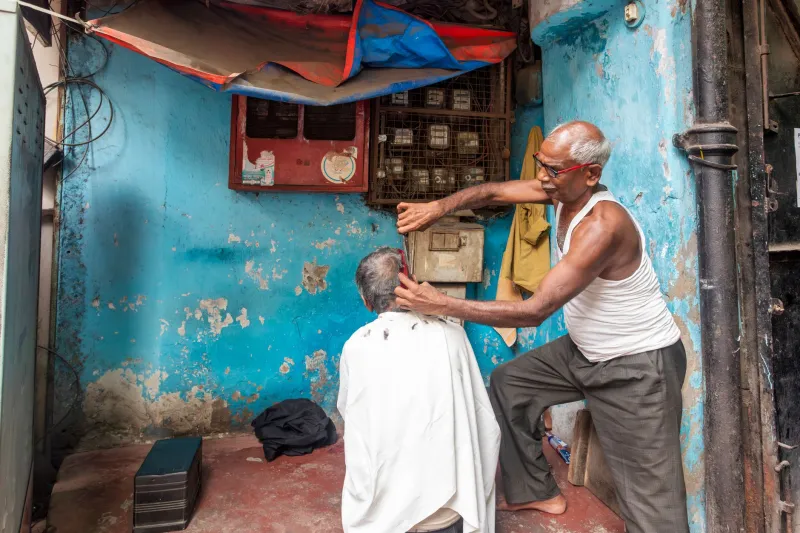
There is a particular kind of travel confidence that comes from knowing exactly where you are going. You have the map pulled up, the reservation confirmed, the phrase for “thank you” rehearsed. Then you sit down in a stranger’s chair in a city where you do not speak the language, and someone asks you a question about your hair. Suddenly the itinerary is gone. What is left is a very ordinary, very local forty-five minutes—and that is precisely the point.
The case for the chair
Guided tours are built to explain a city. A barbershop or salon is built to serve one. That difference matters. In a neighborhood shop, you are not a audience member; you are a customer with a Tuesday appointment, a slightly vague request, and a chance to watch how people greet each other, complain about the weather, tease the person in the next chair, and decide what “a little off the top” means in this part of the world.
A haircut abroad is also refreshingly unglamorous. Nobody is going to frame it on the wall. You will not post a dozen photos of the clippers. But you will come out with a story about the barber who asked where you were from and then listed every American city he knew, or the salon owner who handed you tea and corrected your pronunciation of the neighborhood. That is the souvenir that does not weigh anything.
Pick the shop, not the “experience”
Start by resisting the urge to book the boutique place near the main square with a website full of moody lighting and a “traveler package.” Instead, look for a shop that seems to serve the people who live nearby. Google Maps and local review apps are useful, but the sidewalk is better. Walk past a few places. Does the shop have regulars? Is there a wait, a rotation of chairs, a stack of magazines in the local language? A place that looks slightly too ordinary is usually exactly right.
If you are nervous, choose a barbershop for a simple cut or a beard trim, or a salon for a wash and blow-dry. These are low-risk appointments in most cities. Avoid asking for a dramatic transformation on a tight schedule. You are there for the ritual, not a reality show reveal.
Explain what you want without a shared language
This is where the awkwardness earns its keep. Photos help more than adjectives. Bring two or three pictures: one of your current hair, one of a length you like, and one of what you absolutely do not want. Point. Use your hands. Say the number of the clipper guard if you know it. “Short on the sides, a little longer on top” is a perfectly good sentence, but a picture of a haircut you actually like is better.
Be honest about your tolerance for risk. If you are not ready for a surprise, say so with gestures and a serious face. Most professionals would rather confirm than guess. If you are ready for a local interpretation, lean in. A good barber or stylist is reading your hair, your head shape, and the shop’s own style. Let them do that.
And if the conversation stalls? That is fine. Smile, shrug, point at the photo, and enjoy the background noise. You are not failing at cultural exchange because you cannot debate football or local politics. You are succeeding by being a polite guest in a small room.
Tipping, payment, and the etiquette of the chair
Tipping is one of the easiest things to overthink. In the US, we tend to tip generously and automatically. Abroad, the norm varies widely. In some countries, service is included; in others, rounding up or leaving a small amount is appreciated; in others, tipping can feel awkward or unnecessary. Check a current local guide before you go, and when in doubt, ask the shop directly or follow what you see other customers do.
Carry enough local cash to pay for the service and a small tip if it feels appropriate. Many shops take cards, but smaller neighborhood places may prefer cash. If you are unsure, ask before the cut begins. A simple “card okay?” with a raised eyebrow goes a long way. And keep your expectations about the result in check: a $20 haircut in one city might cost the equivalent of $8 in another and $60 in a third. You are paying for time, attention, and a small window into local life.
The awkward part is the souvenir
Here is the truth: you will probably mispronounce something. You may end up with a slightly different fringe than you imagined. You may sit in silence while three people around you carry on a conversation you cannot follow. That is not a failure. It is the texture of being somewhere else.
A museum can tell you what a city values. A neighborhood barbershop shows you how it spends a Saturday morning. You leave with a cleaner neckline, a strange new confidence, and a memory that belongs only to you. Book the chair. The tour can wait.