Passport Not Required: Five American Blocks Where Dinner Comes With a Boarding Pass
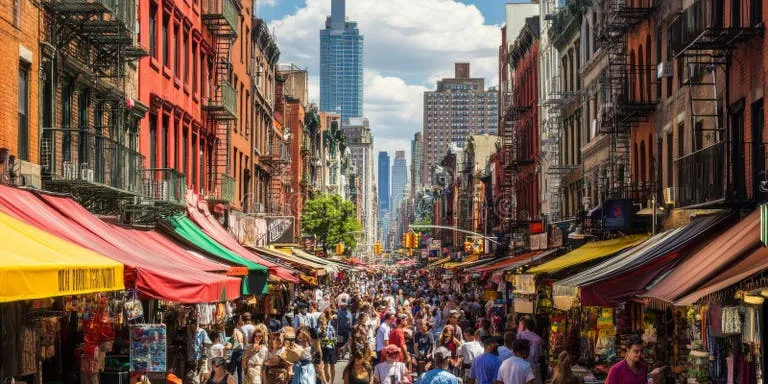
Photo: diverse ethnic food market street colorful restaurant neighborhood, via thumbs.dreamstime.com
There's a certain kind of magic that happens when you sit down at a table where the recipes are older than the restaurant, older even than the family's arrival in America. The food arrives, and suddenly you're not on a strip mall in Sacramento or a corner in Queens — you're somewhere else entirely. This is the quiet promise of America's immigrant food corridors: the world, served family-style, no customs line required.
Here are five neighborhoods where a single meal doubles as a round-trip ticket.
Pico-Union, Los Angeles: Oaxaca Without the Flight
Los Angeles has Mexican food everywhere, but Pico-Union does something different — it tastes specifically of Oaxaca. Here you'll find tlayudas the size of hubcaps, memelas piled with fresh queso, and mole negro with a depth that comes from toasting more than two dozen ingredients by hand.
Many of the cooks behind these kitchens came from Oaxaca City and the surrounding valleys, and they'll tell you — often unprompted — which village their mole recipe comes from. Order a hot chocolate made with hand-ground cacao, grab a pan dulce from a panadería for the road, and you've had a better day trip than most tourists get out of a resort in Cancún.
Eat like a local: Go midweek at lunch, order the day's special, and don't skip the chapulines if they're offered. Yes, they're grasshoppers. Yes, they're delicious.
Little Saigon, Orange County: A Bowl of Pho Is a History Lesson
Just south of Anaheim, the largest Vietnamese community outside Vietnam stretches for miles along Bolsa Avenue. The pho here isn't a trend — it's a lifeline, a dish that arrived with refugee families in the 1970s and 1980s and became the beating heart of the community.
Slide into a plastic stool, squeeze in your lime and bean sprouts, and listen to the room: three languages blending over the clink of spoons. Between meals, wander the Asian Garden Mall for sticky rice cakes, dried fruits, and iced coffee strong enough to restart your week.
Eat like a local: Pho is technically breakfast in Vietnam. Arrive by 9 a.m., order it with everything, and finish with a cà phê sữa đá.
Little Ethiopia, Washington, DC: Injera as the Great Connector
Along a stretch of 9th Street NW in the U Street corridor, the smell of berbere spice drifts out of doorway after doorway. DC is home to one of the largest Ethiopian communities in the country, and the neighborhood's restaurants are built around a beautiful idea: everyone eats from the same platter, tearing off pieces of spongy injera to scoop up slow-cooked wats and lentil stews.
Dinner here is inherently communal — you can't eat it alone, not really. Bring friends, order the vegetarian combination (a lifeline for any vegans in your group), and finish with a macchiato. Ethiopia invented coffee, after all, and these places take it seriously.
Eat like a local: Wash your hands before the meal — it's tradition, since injera replaces the fork — and don't be shy about going back for one more torn piece.
Brighton Beach, Brooklyn: Black Sea Salt Air
Ride the B train past Coney Island and you'll surface in a neighborhood where the storefront signs flip from English to Cyrillic mid-block. Brighton Beach's waves of immigrants from the former Soviet Union — Georgian, Ukrainian, Russian, Uzbek — have built a boardwalk culture of salamis, pickles, caviar, and long, unhurried dinners.
The real find here is the Georgian table: khinkali dumplings you eat with your hands, khachapuriAdjarian with its molten cheese and egg yolk, and Georgian wine fermented in clay qvevri, a tradition older than the country itself. Between meals, hit the markets for smoked fish and a jar of something pickled that you can't pronounce.
Eat like a local: Order more than you think you need. Leftovers are the point. And if a grandmother tells you to eat more, you eat more.
Buford Highway, Atlanta: The South's Most Underrated Food Road
Atlanta's secret isn't southern — it's a ten-mile stretch of highway lined with strip malls hiding some of the best Chinese, Vietnamese, Korean, and Mexican food in the Southeast. This is where a tortilleria sits two doors down from a Sichuan hot pot joint and a Honduran pupusería.
The trick is learning to read a strip mall: the best places often have the plainest signs. Skip the chains, follow the lunch crowds of cab drivers and construction crews, and ask what came off the stove that morning.
Eat like a local: Cash helps, groups are better, and ordering the thing you can't identify is almost always the right call.
The Point of It All
Every one of these neighborhoods exists because someone packed up their life, crossed an ocean or a border, and started cooking the food of home. Eating there isn't just dinner — it's a small act of exchange, a handshake across a table. The world is closer than your passport suggests. It might be a twenty-minute drive away, simmering in a pot, waiting for you to pull up a chair.