Fold the Phone, Follow the Pencil: Why a Stranger's Map Beats a Blue Dot
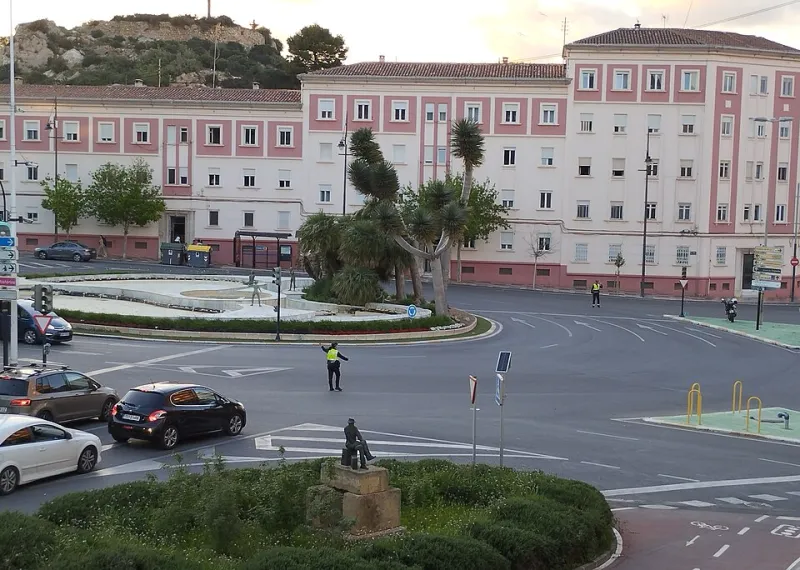
Photo: P4K1T0, CC0, via Wikimedia Commons
Turn-by-turn navigation is a miracle of modern travel. It is also a small, quiet thief.
I started noticing this on a trip to Porto a few years ago. My phone knew every alley, every bakery, every shortcut back to the hotel. I knew nothing. I had walked four miles and could not have drawn you a single block. The blue dot had done the looking for me.
So I tried an experiment that has since become a travel rule: in any unfamiliar city, I ask a stranger to draw me a map. Not because my phone is dead. Because a hand-drawn map is a conversation with a destination.
The Blue Dot Always Knows. It Just Does Not Care.
Google Maps is efficient, but efficiency is not the same as intimacy. The app will tell you to turn left in 200 feet. A pharmacist named Ana will tell you to turn left at the church with the blue tiles, then walk past the place where the old men play cards, and do not cross the big road until you see the orange cat. One set of directions gets you there. The other gives you a neighborhood.
There is also the matter of attention. When I follow turn-by-turn instructions, I look at my phone. When I ask for directions, I look at a person. I notice their hands, their accent, the way they debate the best route with a coworker. I remember the bakery they point to. I remember the street name because I had to repeat it back.
The Map That Comes With a Face
Some of my favorite souvenirs are not souvenirs at all. They are scraps of paper with arrows and landmarks drawn in ballpoint pen. One from a bookseller in Ljubljana has a tiny drawing of a bridge and the words good coffee here. A waiter in Mexico City once sketched a route to a market on the back of a receipt, then added a star next to a stall selling blue corn quesadillas. I found the stall. I also found his cousin, who was working the grill.
These maps are imperfect. That is the point. They are translated through memory and opinion. They include the things a routing algorithm would never think to mention: the steep hill, the shop that closes early on Wednesdays, the plaza where you should sit for ten minutes because the light is good.
Wrong Turns Are Part of the Souvenir
I am not going to pretend that getting lost is always charming. It is not charming when you are carrying a suitcase, when it is raining, when your phone is at 3 percent. But most travel days are not emergencies. Most travel days have room for a small detour.
When I stop treating every wrong turn as a failure, I start noticing things. A courtyard with laundry strung between windows. A corner store with a hand-painted sign. A kid practicing trumpet in an open doorway. These are not attractions. They are just life, happening in public. They are also the moments I end up talking about when I get home.
How to Ask Without Being a Nuisance
Asking for directions is a skill, and like any skill it has etiquette. A few rules I try to follow:
- Ask someone who is not obviously in a hurry. A shopkeeper behind a counter, a person waiting for a bus, a dog walker pausing at a corner. Avoid people on phones, people running, people with a stroller and a toddler and a look of deep concentration.
- Start with a greeting and a question. A simple excuse me, followed by sorry to bother you, goes a long way. In many places, skipping the greeting feels rude. Learn the local version of hello and thank you. It is not a party trick. It is basic respect.
- Be specific. Do not ask where is the good food. Ask how to get to the market, the museum, the street with the old cinema. People can answer specific questions.
- Carry a small notebook or a piece of paper. Some people will draw. Some will just point. Both are useful. If they draw, ask if you can keep it. I have never been refused.
- Do not overstay. Get the directions, repeat them back, thank them, and let them go. If the conversation continues naturally, great. If not, you have still had a real exchange.
- Return the favor. If someone asks you for directions, take the thirty seconds. You are now part of someone else's map.
What You Lose When You Never Get Lost
The strange thing about always knowing the route is that you stop paying attention to the route. The city becomes a series of instructions. You arrive, you do the thing, you leave. You can do this in a dozen countries and come home with a camera roll full of pictures and no sense of how any of those places fit together.
Asking for directions is not a nostalgia stunt. I still use my phone. I still check the map when I am tired or late or turned around. But I try to leave room for the human version first. The hand-drawn map. The wrong turn. The stranger who says follow me, I am going that way.
That is the part I remember. Not the blue dot. The person who helped me find the place, and the small story we made on the way there.