The Best Free Welcome Mat in Any City Is Made of Books
You land with a list. Museum, market, that photo spot everyone posts. Maybe a restaurant someone’s cousin recommended. All good. But if you want the fastest read on a foreign city, skip the welcome tour and find the public library.
This is not a trick for bookworms. It is a practical travel move. In 2026, when a free afternoon feels like a small victory, a city’s library gives you air conditioning, Wi-Fi, clean restrooms, and a front-row seat to ordinary local life. It is also one of the few places where you can learn a city’s rhythm without paying for a ticket.
The City’s Living Room, Not Its Showroom
Hotel lobbies are designed to impress you. Libraries are designed to be used. That difference matters.
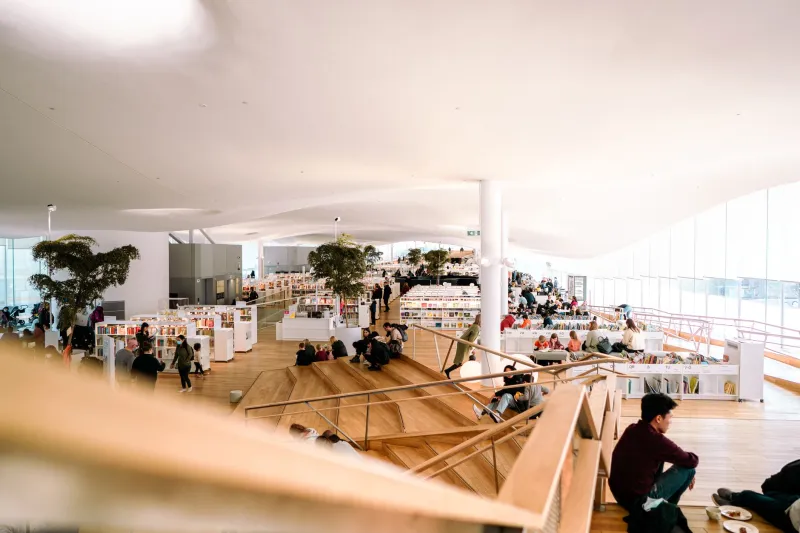
Walk into a public library abroad and you will see students cramming, retirees reading newspapers, parents wrangling toddlers, freelancers nursing a coffee, and someone printing a form they probably should have printed yesterday. Nobody is performing local culture for you. They are just living it. For a traveler, that is gold.
And the building itself is often worth the detour. Plenty of cities treat their central library as a civic statement—glass, wood, light, weird chairs, public art. You get an architecture fix without buying a museum ticket, and you get context that no audio guide can supply. Look at the bulletin boards. Pick up the free newspapers. Read the flyers by the elevator. You will learn more about a neighborhood in ten minutes there than in an hour of scrolling.
A Visitor’s Card Can Go a Long Way
Rules vary, so do not assume. Some libraries let anyone walk in and use the Wi-Fi. Others require a card for computers or borrowing. Many offer a visitor membership, a day pass, or a temporary account if you ask nicely and show a passport. Ask at the front desk. The worst answer is no, and you have still found a quiet place to sit.
If you can borrow, great. Browse the English-language shelves and see what locals think Americans might want to read. Check out the local history section even if you cannot read the language—maps and photographs are wonderfully democratic. Grab a library newsletter. Look for free lectures, film screenings, language exchanges, craft nights, and exhibits tucked into hallways. These are not tourist attractions. They are neighborhood events, which is exactly why they are worth your time.
One practical note: do not treat the library like a luggage storage unit. Some may allow bags, some will not. Keep it light, keep it quiet, and follow the same etiquette you would at home.
The Calendar You Cannot Find in a Guidebook
Guidebooks are good at monuments. They are less good at telling you that the library hosts a Saturday repair cafe, a Tuesday conversation club, or a small photo exhibit about the neighborhood’s old bakeries. That stuff lives on paper flyers and local websites, and it changes constantly.
Ask a librarian a simple question: “What is happening here this week that a visitor might enjoy?” You will get a real answer, usually with an opinion attached. That is cultural exchange in its most useful form. You are not buying an experience. You are joining one that already exists.
This is also a smart move for families. Children’s sections abroad are often welcoming, with picture books, play areas, and other parents who understand exactly why your kid is melting down at 3 p.m. It is a reset button for everyone.
How to Be a Good Guest
Libraries are free, but they are not disposable. Keep your voice low. Ask before taking photos of people or signage. Do not camp out in a study seat for four hours if the room is full. If there is a friends-of-the-library sale, buy a used book—it is a cheap souvenir with a story attached. If you spill something, tell someone. If you can, drop a coin in the donation box.
And if you want to practice before you go abroad, start at home. Your local U.S. library probably has a book club, a language group, a lecture series, or a shelf of travel guides. Spend an afternoon there and pay attention to how the space works. You will be a better library guest in Lisbon, Helsinki, or Mexico City because of it.
The Stop That Pays You Back
A library will not replace the famous sights. It will make them make more sense. Use it on a rainy day, a jet-lagged morning, or the afternoon when your budget needs a break. Then walk out into the neighborhood around it. Find the grocery store, the park, the cafe with plastic chairs and a handwritten menu. That is the city behind the city.
Every journey tells a story. Start yours here—with a library card, a quiet chair, and a town that has no idea you are about to fall for it.