Same Order, New Friends: The Art of Becoming a Regular in a City You Don't Live In
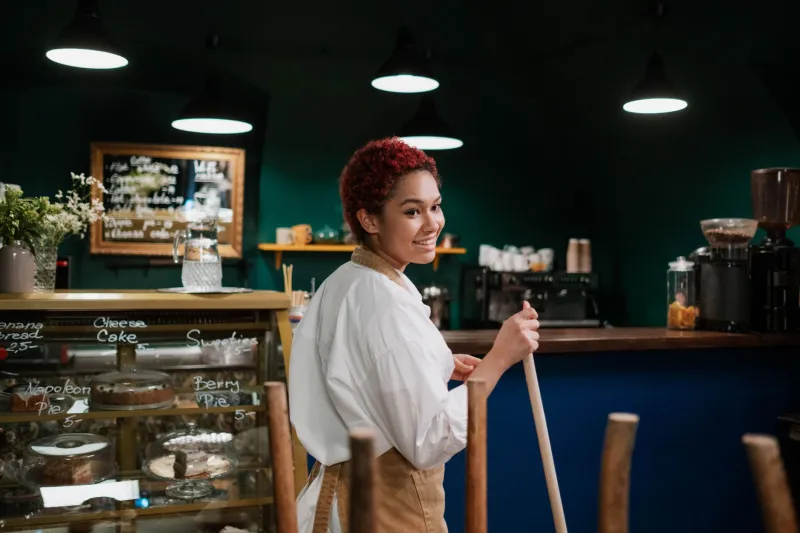
There's a moment that happens on repeat visits that no guidebook can sell you. It's day four in Osaka, and the woman behind the counter at the tiny bakery near your rental slides your melon pan across the glass before you've said a word. She raises an eyebrow toward the coffee machine. You nod. That's it. That's the whole transaction — and it's worth more than any museum.
Most American travelers treat a trip like a tasting menu. New neighborhood every day, new restaurant every meal, photos to prove it all happened. It's exhausting, and it keeps you at arm's length from the place you flew eleven hours to reach. The alternative is almost embarrassingly simple: become a regular somewhere. Do the thing locals do — repeat.
Why Repetition Unlocks What Itineraries Can't
When you walk into a shop for the first time, you're a customer. When you walk in for the fourth time, you're a pattern. And humans are pattern-seeking creatures — the baker starts wondering where you're from, the barber asks what you do back home, the coffee guy tells you which market is worth your Saturday morning.
This isn't a theory. Talk to enough long-term travelers and the same story shows up in different costumes. A schoolteacher from Portland told me about a week in Lisbon where she bought bread from the same padaria every morning; by day five the owner was saving her a loaf and teaching her Portuguese numbers. A guy from Chicago got his haircut three times in two weeks at a Tokyo barbershop and left with an invitation to a neighborhood izakaya — the kind with six seats and no sign.
None of that was on a map. All of it came from showing up twice.
Picking Your Spot: Which Routines Translate Best
Not every daily ritual works everywhere, but a few are remarkably universal:
- Morning coffee or bread. Bakeries and coffee counters are low-stakes, high-frequency, and staffed by people who see the same faces daily. In Japan, morning kissaten culture practically invites it. In Mexico, the panadería run is a civic institution.
- The barbershop or salon. Hair is personal everywhere. A repeat cut is a fast track to conversation, even through a translation app.
- A neighborhood bar or izakaya with a counter. Sitting at the counter — not a table — puts you next to the person pouring. Solo travelers, this is your superpower.
- A corner produce stand or market stall. Buy your fruit from the same vendor. Watch how quickly "the usual?" becomes a friendship.
The key is choosing something you'd genuinely do at home. If you never visit bakeries in Ohio, don't force it in Osaka. Authentic routine can't be faked, and locals can smell a performance.
The Rules of the Repeat
A few ground rules from travelers who've done this well:
Go at the same time. Regulars are recognized partly by rhythm. The 7:40 a.m. coffee becomes yours.
Learn the order in the local language. Even five words — please, thank you, same again — signals respect and effort. You don't need fluency; you need consistency.
Say yes to the second invitation. The first conversation is small talk. The second one is where the ramen recommendation that isn't on Google Maps comes from.
Tip the local way, not the American way. In Japan, don't. In much of Europe, round up. Know before you go, because over-tipping can be as awkward as none.
Accept that one great regular spot beats five okay ones. This is the hardest rule for travelers raised on "see everything." Resist the FOMO. The city will still be there; your new friend at the bakery might not.
What You Actually Get
Here's the honest pitch: becoming a regular won't make you a local. A week is a week. But it collapses the distance between visitor and neighbor in a way that nothing else does. You stop consuming a place and start participating in it. You learn the neighborhood's rhythm — when the school kids swarm, when the old men take their benches, when the shop next door is quietly closed on Thursdays.
And you take home something a souvenir shelf can't hold: the strange, warm feeling of being known in a city where you know almost no one. The baker in Osaka may never learn your full name. But she knows your order, your smile, the time you come. On day six, when she hands you an extra pastry "for the road," you'll understand why some travelers book their next trip before the first one ends.
Next time you plan a getaway, leave a few gaps in the itinerary. Pick one counter, one chair, one morning ritual — and go back. The world opens up fastest to the people who keep showing up.