Skip the Restaurant, Pull Up a Chair: The Case for Cooking in a Stranger's Kitchen
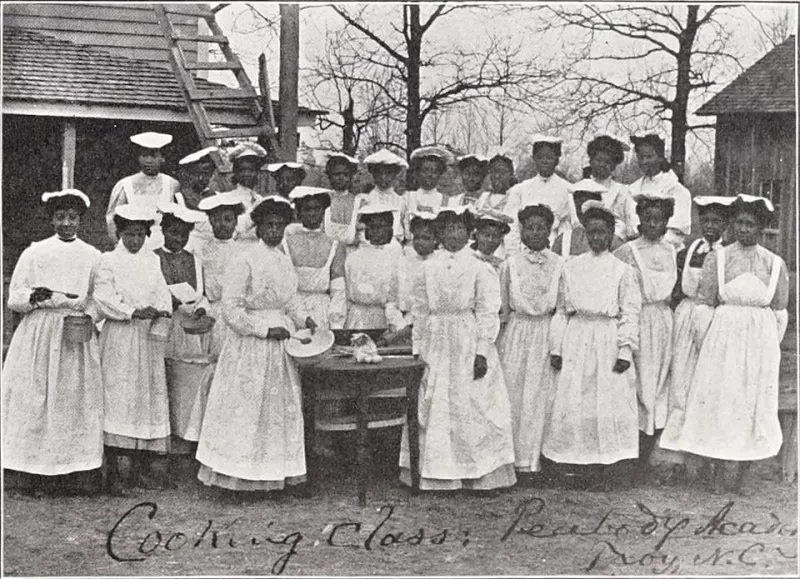
Photo: Unknown, book in which the image is published in was edited by W. N. Hartshorn and George W. Penniman., Public domain, via Wikimedia Commons
Let me confess something I'm not proud of: I've spent entire vacations eating at restaurants that could exist in any airport. Not on purpose. But there's a gravitational pull toward the places with English menus and TripAdvisor stickers, and after a long day of sightseeing, even the most determined traveler caves.
A few years ago in Chiang Mai, a guesthouse owner asked if I wanted to come to her sister's house to help with dinner. Not a class. Dinner. I spent four hours pounding curry paste with a mortar the size of a fire hydrant, getting corrected on my knife grip, and listening to two sisters argue about the right amount of fish sauce in three languages. It cost me nothing but a bag of limes from the market. It remains the best meal — and the best memory — of any trip I've taken.
I've been chasing that feeling ever since, and here's my argument: the home kitchen, not the restaurant, is where a country actually lives.
The Recipe Isn't the Point
The rise of home-cooking experiences — from Puglia's pasta nonnas to market-to-table classes in Mexico City — is often framed as a food trend. I think it's something else. It's a reaction to the flattening of travel, the sense that we can see any city on Instagram before we land. Restaurants, even excellent ones, are performances for guests. Kitchens are where people drop the performance.
When you're chopping onions next to someone's actual dinner prep, the conversation goes places no tour guide will. You hear about their kid's school, their complaints about the neighborhood changing, their opinion of the current government. The food becomes a vehicle. What you're really buying is access.
How to Find the Real Thing
Not every 'cook with a local family' listing delivers what it promises. Some are small restaurants wearing a costume. Here's how I separate the genuine article from the staged version:
Look for hosts who cook every day anyway. The best experiences are people who'd be making dinner regardless and don't mind company. If a listing describes a 'demonstration' with 'sample portions,' that's a classroom. Nothing wrong with that — but it's not what I'm talking about.
Market trips are a green flag. Any host who takes you shopping first — haggling over chilies, introducing you to the fish vendor by name — is showing you their real routine, not building a set. In Puglia, my host made me carry the eggs because, she explained, 'You break them, you learn.'
Small is honest. One to six guests. The moment a 'family kitchen' has a gift shop, you know how the story ends.
Read the recent reviews for the word 'home.' If past guests mention the host's family, their neighborhood, or being invited back, you've found gold. If every review is about the food alone, keep scrolling.
Platforms like EatWith, Traveling Spoon, and local Facebook groups are starting points, but the best leads I've ever gotten came from people — guesthouse owners, taxi drivers, the woman at the laundry who noticed I looked lost. Ask around. Humans are the original booking engine.
The Etiquette of Showing Up
A few rules I've learned, sometimes the hard way:
- Bring something. Wine, dessert, or something from your home state — Texas pecans were a hit in Lisbon. Never arrive empty-handed.
- Do the work you're given without negotiating. If you're told to stir, stir. If you're told to leave the dough alone, leave it alone.
- Wash dishes. Offer at minimum. In more than one country, this is how I went from guest to friend.
- Ask before photographing. The kitchen is their home first, your content second.
- Send a follow-up. A photo of you attempting the recipe back home, translated into their language if you can. I promise you this gets remembered.
What You Actually Bring Home
You can buy a magnet anywhere. What you can't buy is the moment my Chiang Mai host's sister finally approved my curry paste, sniffed it, and said 'okay' — the highest compliment I received in three weeks in Thailand. Or the note my Puglia host sent with the recipe: 'For the flour, in America, use the best you can find. And call your mother.'
The skills fade a little — my hand-rolled orecchiette is still hit or miss. But the connection doesn't. Every time I make that curry, I'm back in that kitchen. That's the souvenir that doesn't weigh anything and doesn't fit in an overhead bin.
So on your next trip, book one night where the destination isn't a place at all. It's a table, a stranger, and a question: can I help you cook?
You'll be amazed what people hand you when you ask.