Falling in Love Before Takeoff: The Case for Over-Planning Your Next Trip
Somewhere between booking a flight to Porto and actually boarding the plane, I fell in love with a city I'd never seen.
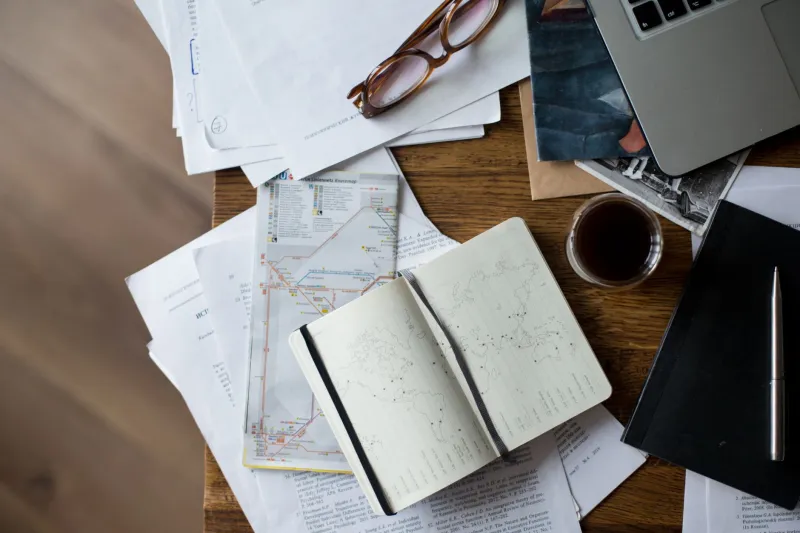
It wasn't the port wine cellars or the tiled facades that did it — I hadn't met those yet. It was a Tuesday night spent cross-referencing two blogs about a bakery in the Bonfim neighborhood, googling what "pão de deus" actually is, and dropping a little red pin on a map I'd titled Porto, Slowly. By the time my boarding pass printed, I'd already lived there a little.
We tend to treat trip planning as the boring part. The admin. The thing to power through so the real fun can start. I want to make the case for the opposite: that the weeks before departure are not a prelude to the journey. They are the journey — just the chapter nobody talks about.
Anticipation Is a Destination Too
Psychologists have actually studied this. Researchers have found that a big chunk of the happiness we get from a trip comes from anticipating it — sometimes more than from the trip itself. Think about the last vacation you genuinely loved. Odds are you were excited for weeks. You pictured it on your commute. You mentioned it to coworkers. You were already traveling before you ever left the ground.
For Americans especially, this matters. We take the fewest vacation days of almost any developed country, and we often take them in one big compressed burst. If your one trip a year is a ten-day sprint, stretching the joy across two months of anticipation is basically free extra vacation. Same PTO, triple the mileage.
My Ritual: The Neighborhood Guide I Write Before I Go
Over the years, my planning has hardened into something closer to ritual than task. Here's the framework, in case you want to steal it:
1. Build a map with a personality. I skip the generic starred list and make a color-coded Google Map: blue for coffee, green for parks, orange for the places locals told me about online, gray for rainy-day backups. The act of categorizing forces me to learn the geography. By day three in a new city, I already know which neighborhoods neighbor which — because I placed every pin myself.
2. Read the local news. This is the step most people skip, and it's the one that changes everything. I'll spend an evening reading the English-language or translated news from wherever I'm headed — a transit strike, a new museum opening, a heat wave, a neighborhood in the middle of gentrification debates. Suddenly you're not visiting a postcard. You're visiting a place with a present tense. In Lisbon, I knew which metro line was under construction before the taxi driver complained about it, and we had something to talk about.
3. Pick one hyper-specific rabbit hole. Each trip, I go deep on exactly one weird topic. The history of azulejo tiles. Why Hungarian wine bars stay open so late. The story behind a single mural. It gives me a lens for the whole trip and, honestly, a great answer when someone at a dinner party asks what I've been into lately.
4. Write it down — on paper. I keep a small notebook per trip, and I handwrite a one-page guide to the neighborhood where I'm staying: the corner café, the bakery, the bookshop, the shortcut to the river. Something about writing it longhand commits it to memory. On the ground, I navigate half the time without pulling out my phone, which makes me feel like I live there instead of visiting.
5. Leave deliberate holes. Here's the crucial counterweight: I plan about sixty percent and leave the rest blank. The ritual is research, not scheduling. Every trip needs unbooked afternoons for the alley you'll wander down and the grandmother who'll wave you into her kitchen. The pins are invitations, not obligations.
But Doesn't Planning Kill the Spontaneity?
I hear this objection a lot, usually from people who equate planning with itineraries hour by hour. That's not planning — that's a spreadsheet with a boarding pass.
The distinction I've landed on: plan the context, improvise the moments. Know the neighborhoods. Know what the city is arguing about this year. Know which market is open on Sundays. Then let the actual days unfold. Spontaneity works better when you understand the canvas you're painting on.
The travelers who come home saying "nothing went according to plan and it was amazing" usually had a plan to deviate from. The ones who land with nothing booked and nothing known often just default to the first English-language menu they see.
Start Before You Book
Here's my favorite hack, and the reason I think everyone should try this: begin the ritual before you buy the ticket. Spend a few evenings researching a place you're only considering. Read its news. Build a draft map. Watch how the destination gets under your skin.
Sometimes you'll realize it isn't calling to you, and you'll book somewhere better. Often, you'll book the flight just to make the pin-dropping official. Either way, you've already started traveling.
Every journey tells a story — and for me, the first chapter is always written at my kitchen table, weeks before takeoff, with a coffee going cold and a map full of little colored dots. The plane just gets me to the rest of it.