The Souvenir That Earns Its Keep
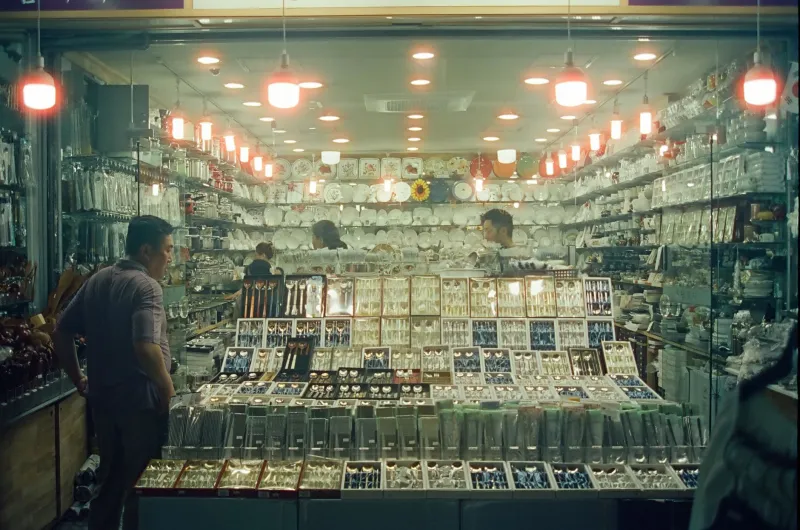
Travel souvenirs have a shelf-life problem. The miniature Eiffel Tower loses its magic somewhere between customs and the junk drawer. The straw hat from the beach town gets crushed under a winter coat. The painted plate is lovely, but you never quite trust it in the dishwasher. Meanwhile, the cheap wooden spoon you grabbed at a market in Oaxaca is still in your kitchen, doing actual work every time you make soup.
That is the quiet argument for buying the broom. Or the rice cooker. Or the dish towel, the spice tins, the colander, the little paring knife with the handle that fits your hand. The best souvenirs are not the ones that look like souvenirs. They are the ones that become part of your Tuesday.
The case for useful clutter
A useful object carries more memory than a decorative one because you touch it. You do not just look at a dish towel from Provence once a year and think, oh yes, that trip. You pick it up after washing grapes, after drying a wine glass, after wiping flour off the counter. The memory arrives in small, unplanned moments. That is how travel stays alive at home: not through a shrine, but through chores.
There is also a practical truth here. Household goods abroad are often excellent, inexpensive, and specific to a place in ways that a keychain can never be. A broom from a Portuguese hardware store tells you something about how people sweep their stoops. A set of spice tins from a Turkish market tells you what a kitchen smells like on a Sunday morning. A rice cooker from Japan is not a souvenir of Japan in the abstract; it is a small machine that will teach you something about rice for years.
The bonus is that these things are usually made for daily use, not for tourists. That means they are honest. They are not pretending to represent a culture. They are just part of one.
Where to shop when you want something real
Skip the gift shop near the main square. Walk ten minutes in any direction and look for the stores locals actually use: hardware stores, housewares shops, kitchen supply stalls, grocery markets, and the household aisles of a neighborhood department store.
In Lisbon, that might mean a dusty ferreteria with brooms leaning in a corner like a bouquet. In Tokyo, it could be a kitchen floor in a department store basement, where rice cookers sit under bright lights like small appliances with ambitions. In Mexico City, a market stall selling clay pots and wooden spoons may be more memorable than any museum shop. In Istanbul, the spice bazaar is obvious, but the smaller neighborhood spice shops are often better for empty tins and refill bags.
Ask yourself a simple question: if I lived here, what would I buy for my kitchen or my closet or my cleaning cabinet? That answer is usually a better souvenir than whatever is printed with the name of the city.
A few good categories to keep an eye out for:
- Brooms and brushes with local handles and bristles
- Dish towels, napkins, and tea towels that fold flat
- Small kitchen tools: spoons, peelers, strainers, mortars
- Spice tins, small jars, and refillable containers
- Rice cookers, kettles, and other small appliances if voltage works
- Laundry brushes, shoe brushes, and other humble tools
The odd-shaped packing problem
This is where useful souvenirs get real. A broom is not going to fit in a carry-on without a plan. Neither is a rice cooker, a stockpot, or a set of nested bowls. The good news is that most of these items are easier to pack than they look.
For brooms and long-handled tools, check whether the handle unscrews. Many do. If it does not, measure it, tape the bristles, and check your airline's rules for sporting goods or oversized items. Sometimes it is cheaper to ship a broom home than to pay an extra bag fee, and that is not a joke. For rice cookers and small appliances, confirm the voltage and plug type before buying. A converter is not always a safe solution for heating appliances. If the voltage does not match the US, admire it in the store and buy the dish towels instead.
Spice tins and food items need a little care. Seal them well, double-bag powders and dried goods, and declare anything agricultural at customs. Dish towels are the easy win: they fold flat, weigh nothing, and make excellent padding for fragile items. Use socks and T-shirts to wrap handles and corners. Leave a little room in your suitcase on the way out, because the best household souvenir is usually the one you did not plan for.
Use it, do not shrine it
The final step is the one most travelers skip. Use the thing. Put the dish towel in the kitchen rotation. Fill the spice tins with paprika and cumin. Cook rice in the rice cooker on a Sunday. Sweep the porch with the broom from Lisbon, even if your porch is in Ohio.
A souvenir that gets used will eventually get worn, stained, or chipped. That is fine. A scratched saucepan is not a failed souvenir. It is proof that the trip came home with you. Every journey tells a story, and the best ones keep telling it every time you make dinner.